
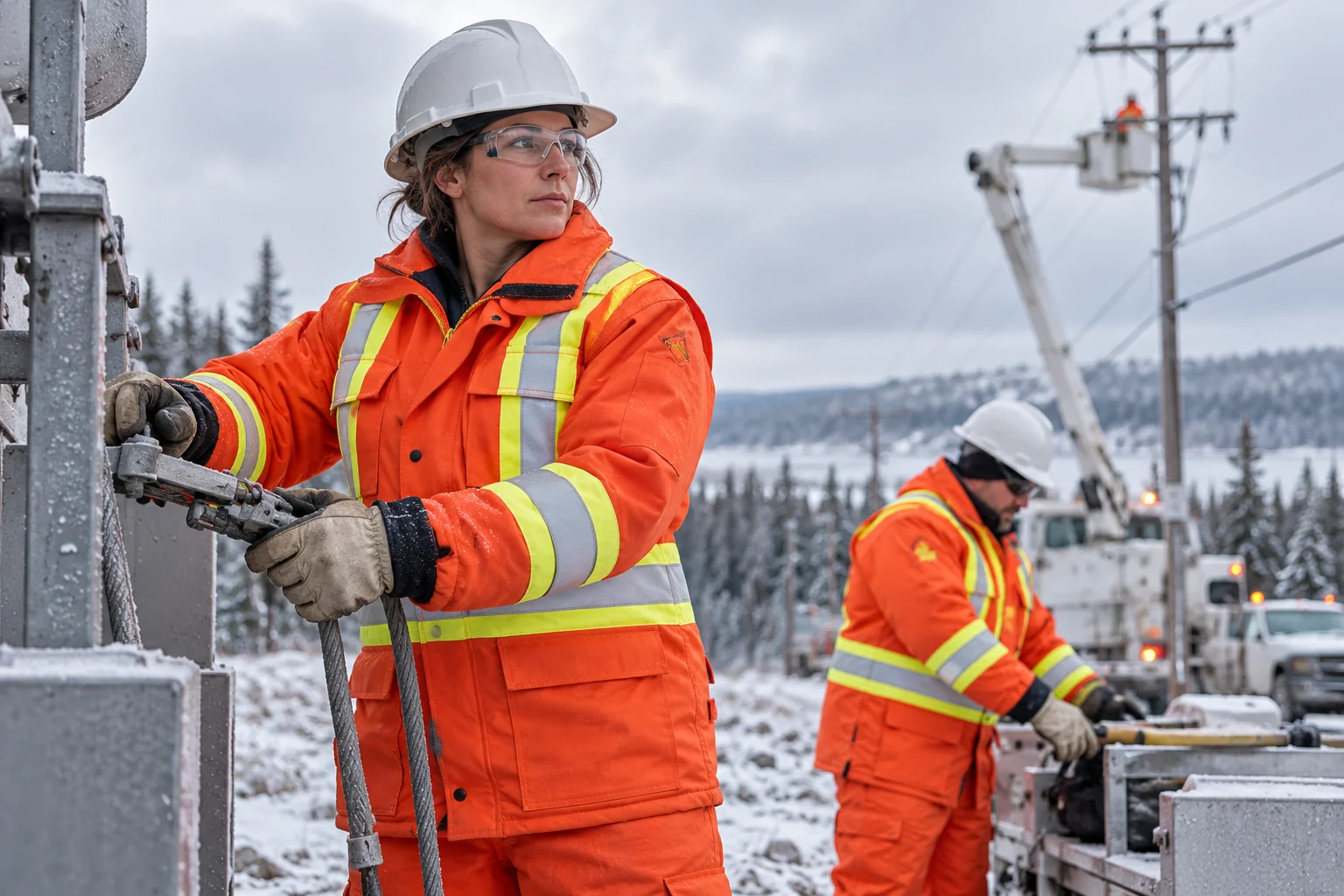
A long shift outdoors feels different when the temperature drops, the wind picks up and daylight fades earlier. For crews in utilities, energy, construction and industrial workplaces, getting ready for winter means choosing workwear that keeps them warm, lets them move and gives the protection the job requires.
What to Consider When Choosing Winter FR Workwear
Start with your jobsite conditions: how long workers are outside, wind, precipitation, visibility, activity level and the hazards your workplace has identified. A worker moving between a heated vehicle and an outdoor site may need a different setup than someone stationed outside for hours.
When flame-resistant or arc-rated clothing is required, every layer matters, including base layers, hoodies and outerwear. Choose garments that meet your employer’s specifications, and check product information and labels for the protection and fit you need.
How to Layer FR Clothing for Cold Weather
Use three layers: a moisture-wicking FR base layer, a mid-layer such as an FR hoodie for extra warmth, and insulated or water-resistant outerwear like a parka, FR coveralls or FR bibs. The goal is to stay warm and dry while keeping the movement needed to climb, bend, reach and handle equipment.
1 / BASE LAYER
Moisture-Wicking FR Layer
2 / MID-LAYER
FR Hoodie for Extra Warmth
3 / OUTER LAYER
Insulated FR Outerwear
An FR hoodie is an easy layer to add or remove as conditions change during the day. Try your full layering setup together before a shift to make sure cuffs, closures and overlapping layers still work when you move.

Insulated FR Coveralls vs. FR Bibs: Which Is Right for Your Crew?
Insulated FR Coveralls
Insulated FR coveralls give full-body coverage in one piece, with no gap at the waist. They work well for workers who stay outside for long stretches or kneel and crawl often.
Insulated FR Bibs
Insulated FR bibs pair with a parka or jacket, so workers can remove the top layer when they move indoors or get warm from physical work. Many crews like the flexibility of bibs for changing conditions.
Whichever you choose, check how it closes at the collar, sleeves, waist and ankles, since cold air finds gaps in those spots. Keltek offers women’s and men’s insulated FR options, making it easier to build winter setups that fit different workers.
FR Hard Hat Liners and Other Winter Accessories
Coveralls and bibs cover most of the body, but the head, neck and hands can still make a cold shift uncomfortable. An FR hard hat liner adds warmth under a hard hat and covers the neck and ears without interfering with head protection. Keltek’s FR hard hat liner is one option for added head and neck coverage.
Review the hand and footwear protection your site requires too, and make sure every winter accessory works with the rest of your protective equipment.

Winter Workwear Checklist: Prepare Before the First Cold Shift
Fall is the best time to check winter clothing, before crews need it every day:
- Confirm sizing on coveralls, bibs, parkas and hoodies for each worker
- Inspect garments for wear, damage or worn-out closures
- Check that hard hat liners fit with current hard hats
- Confirm base layers are FR-rated and outer layers are suited to wet conditions
- Replace pieces that no longer meet workplace requirements
Having the right layers ready makes it easier to adjust when the forecast changes. Explore Keltek’s winter workwear, including FR coveralls, FR bibs, FR hoodies and hard hat liners, to start building a setup for your team.
Explore Winter Workwear
Shop Winter FR Workwear by Category
Browse insulated FR coveralls, bibs, parkas, hoodies and winter accessories. Check individual product specifications to find garments that meet your workplace requirements.


Get Your Crew Ready for Winter
Choosing Your Winter Gear
Winter FR Workwear FAQs
What should I look for when buying winter FR workwear?
Start with your employer’s protective clothing requirements, then consider temperature, wind, precipitation and how active you are during a shift. Check garment labels and product specifications for the required flame-resistant or arc-rated protection. Choose a fit that allows your layers to work together without restricting movement.
Are insulated FR coveralls or FR bibs better for winter?
Insulated FR coveralls offer one-piece coverage and can suit workers who spend long periods outdoors. FR bibs worn with a suitable jacket or parka offer more flexibility when moving between indoor and outdoor areas. The right choice depends on your jobsite conditions, movement needs and required protection.
How should I layer an FR hoodie with insulated workwear?
An FR hoodie can serve as a warm mid-layer between an appropriate base layer and insulated FR outerwear. Try the full combination together to check that you can bend, reach and operate equipment comfortably. Follow your employer’s layering requirements; do not assume that adding garments automatically provides the required level of protection.
Can I wear an FR hard hat liner under any hard hat?
Check the hard hat manufacturer’s instructions before adding a liner. Select an FR hard hat liner that meets your workplace requirements and is compatible with your head protection. Confirm that it does not interfere with the suspension, secure fit or other protective equipment.
When should winter FR workwear be replaced?
Inspect winter FR garments before the season and regularly during use. Look for tears, damaged closures, worn areas and contamination. Follow the garment manufacturer’s care and inspection instructions and your employer’s replacement policy. Remove clothing from service when its condition no longer meets those requirements.